Could live streaming sword custom builds enhance customer trust and interest?
That customary ancient blade remains a exquisite masterpiece of skill, but assume you wish for to exhibit your unique mode? Adapting your tool is a rewarding journey, allowing you to assemble a truly unique piece. From the tsuka wrapping and band to the plate design and cutting motif, each segment offers a chance for specialized modification. This study delves into the territory of katana alterations, providing knowledge for both beginners and proficient enthusiasts desiring to make their footprint on the classical art of the samurai.
Entry-Level Original Fabrication
For beginners eager to embark on the advantageous journey of katana handling skills , 1060 steel katanas bring an ideal entry point. This defined grade of essential steel strikes a optimal point between economical cost and performance . While never as hard as upper-echelon steels, 1060 grants a moderate level of sharpening , making it perfect for newcomers to acquire the preliminaries of sword maintenance and experience the grace of genuine Japanese weaponry. It’s a superb choice for fostering experience without the fiscal burden of more premium steels.
T Gear Steel Cutlasses: Combining Performance and Affordability
For enthusiasts seeking an authentic sword experience without exceeding the budget , T10 alloy katanas represent a compelling option. These tools offer a significant improvement in durability compared to lower-grade alternatives, exhibiting reasonable edge retention and fair flexibility for rudimentary slashing techniques. While not rivaling the eminent characteristics of advanced steels like T100 or folded iron , T10 provides a admirable blend of capacity and reasonableness , making them a trendy choice for trainees and those on a controlled revenue .
Surpassing the Edge : Customizing Your Weapon's Accessories and Hilt
Even though the polished metallic edge is undeniably the core point of a katana, truly amplifying its aesthetic lies in the detailed customization of its accessories and handle . This operation allows craftsmen to reveal their personal approach . Contemplate the expansive possibilities: menuki - decorative trinkets that offer visual focus; the hamon casings – often finely fashioned ; the tsuka center itself, wrapped in traditional ito cord ; and the fusa pommel , which can be fabricated from various substances like treasures or ivory .
- Prefer concepts that resonate with you.
- Explore with varying resources .
- Emphasize strength for a enduring mark .
The Attraction of the Katana: Legacy, Artistry, and Steelwork
A oriental cutlery holds a singular allure, steeped in times of Nippon's history and culture . More than merely a apparatus of combat , it's a token of the fighter class ethos – a fusion of mastery and governance . Its expansion spanned numerous generations, with early edges evolving into the sleek-lined curvature and deadly edge we know today. The manufacture involved is truly spectacular, requiring decades of mentoring to become skilled in . The process involves a multifaceted folding of steel bloom , creating layers that strengthen the edge’s flexibility and shaving ability. Various schools of metalworking started , each with their special secrets and formulas for achieving the ideal poise and acuteness - a truly grueling pursuit.
- Original Katana classes
- The importance of the katana in warrior culture
- Classic crafting approaches
Choosing the Optimal Steel for Your Oriental Blade Project: 1060 vs. T10
Electing the fitting steel is crucially important for any cutlery project, and the conclusion between 1060 and T10 can be intricate. 1060 is a frequented American element, offering a competent balance of rigidity and endurance, supplying it comparatively easy samurai sword to forge. However, T10, a Oriental steel, ordinarily boasts increased wear durability and can conceivably achieve a increased peak hardness, although it can be somewhat demanding to work with and requires refined heat modifying. Consider your experience level and aimed results: for a beginner, 1060 may be a simpler foundation, while the experienced smith might use the improved characteristics of T10.
- Effortlessness of Processing
- Edge
- Maximum Firmness
Discovering Power: Refined Katana Adaptation Practices
Mastering the art of katana refinement extends far beyond basic buffing. Serious smiths are now analyzing advanced techniques to truly activate a blade's hidden potential. This includes intricate work with the heat signature, utilizing specialized ingredients for differential heat treating and carefully nominating the contour of the hand guard to optimize balance and functionality. Beyond purely functional changes, artisans are increasingly focused on achieving unparalleled aesthetic elegance, through complex carving and layered glazes that truly transform a katana into a showpiece.
Shaping Rough Steel into Perfection: Making a 1060 Sword
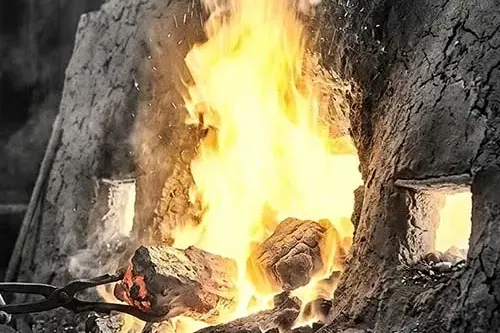
The journey starts with average 1060 metal , a strong material far away the fine katana it will evolve . Accomplished bladesmiths utilize a sophisticated process of layering and forming the crude steel, repeatedly burning it and hammering it to discard impurities and fashion a even grain structure. This tiring process, often lasting for stretches , builds the important toughness and malleability characteristic of a true Japanese saber . Later heat processes , including meticulous hardening and setting , are vital to achieve the sought-after equipoise of sharpness, durability and attractiveness .- Integrating: Lessens impurities and builds grain structure.
- Crafting: Creates the steel into the initial blade form.
- Heat Treatment: Defines the final hardness and flexibility.
The Durable Charm of the Katana: Intensive Inspection of Steel and Adaptation
A historic katana continues a strong symbol denoting Japanese culture , its allure far moving past mere armaments . Forged from rare steel and habitually featuring intricate details , the system of creation itself is a sacred art. Beyond the basic craftsmanship, the ability to modify a katana - from the blade pattern to the grip wrapping and band - opens for a perfectly individual communication for both supporters and followers alike. This blend of time-honored steelwork and boundless personalization results in the katana's continued prominence across the planet .
